…Establish partnerships that support the strategic vision, achieve learning priorities and improve operations.
Graduate Symposium participation
This artifact highlights my ability to engage actively and participate in opportunities that establish partnerships to support strategic visions, achieve learning priorities and improve operations. Through this symposium, I shared reflections on my growth over the program and highlight the experience of a Teaching Assistant in the university, New York Institute of Technology- Vancouver campus. It was a relevant opportunity for my professional improvement as an instructional technologist. This allowed me to apply my understanding acquired in the Multimedia course, create tutorial videos to guide students in their e-module projects, and assist the professor in managing Synchronous ( face-to-face and online) and Asynchronous learning (Canvas Learning Management System).
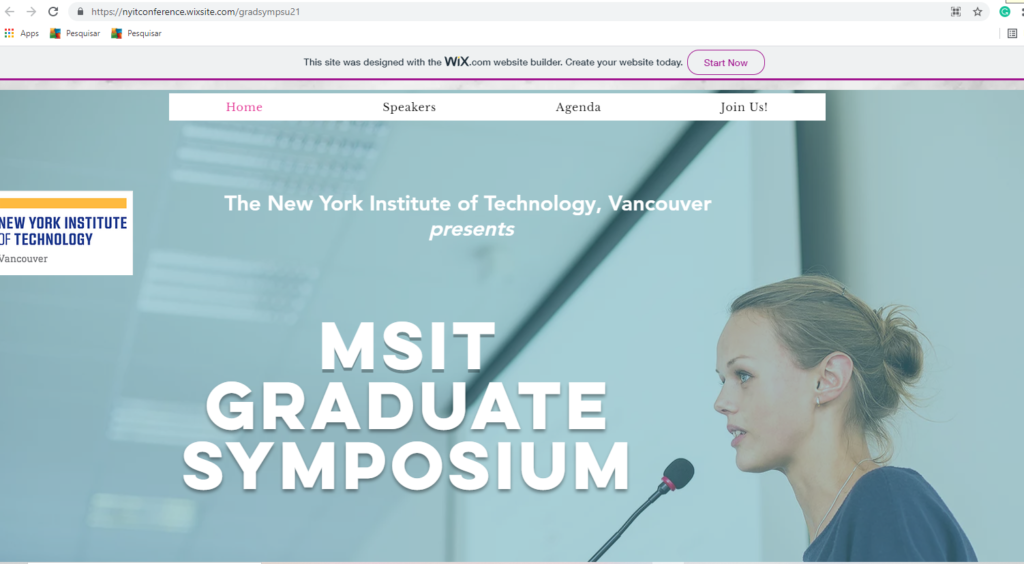
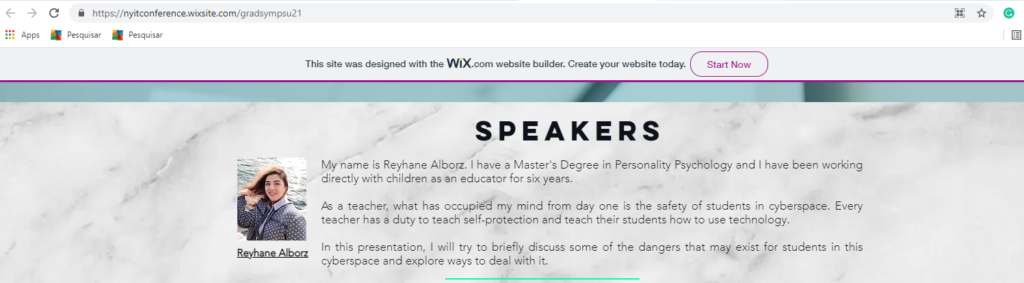
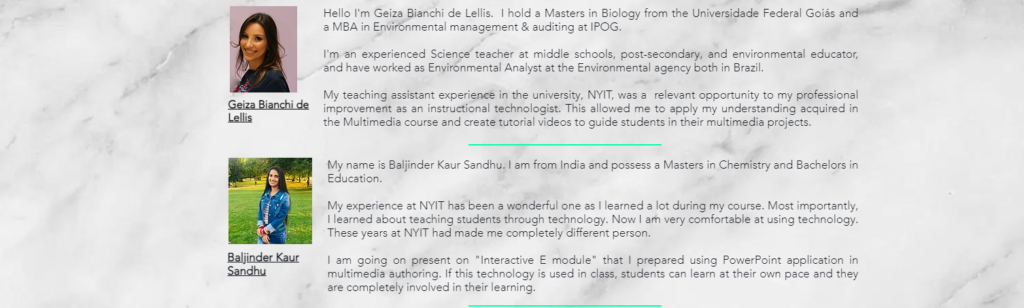
Some highlights of my presentation:
Mentoring by Tutorials using OBS software
To make their interactive videos of non-linear stories (e- module), I mentored students with the following tools: PowerPoint Office 360, Twine, Audacity and OBS. During synchronous classes and through individual assistance by Zoom, I was able to help students in specific points where they felt difficulty using PowerPoint tools. I implemented the instructional strategy based on the experimental theory learning process (Kolb 1974) when I guided students during their learning experience. For the planning of non-linear stories, the professor chose Twine software, which allows plan, edit and tests the story according to the links created. To assist students in this activity, I produced a tutorial video using OBS Studio software, which consists of an Open Broadcaster Software, free and open-source, cross-platform streaming and recording program built with Qt and maintained by the OBS Project (Bailey 2012). I also produced a tutorial video using OBS about the OBS itself, as the students also needed to know how to use this tool. I identified the most considerable doubts they presented to me and explained through the software how to record the video, reduce external noise, and configure the image using green screen background. Another instructional application used in this field experience was Canvas and Zoom. I could post those tutorial videos in Canvas, engage students with announcements, help them keep focused on their assignments and assist the professor in grading and providing feedback in the comments area on the platform. To the MSIT Graduate Symposium, I presented using Zoom meetings through the website. The host of the Symposium created the website using Wix, a creative and easy website maker.
Mentoring by Canvas Learning Management System (LMS)


IMPACT OF INSTRUCTION ON STUDENTS/PARTICIPANTS LEARNING:
The use of OBS software impacted my learning as a trainer and coach in instructional technology because it has many sources options and editing settings to make the videos. It makes the training more professional and enables students engagement. In this experience as a teaching assistant, I could improve my understanding of OBS by using and applying my knowledge of adult learning to create practical students’ learning. Another impactful achievement in this role was the opportunity to mentor students through Canvas, a learning management system (LMS). It enhances my collaboration in online learning, keeping the students connected in the process and allowing them confidence in their abilities. The chance to share this experience in the MSIT Graduate Symposium allowed me to integrate the ISTE standard 5, where I could share, connect and learn with other participants’ experiences. Many participants presented insights in their e-Module projects, and it was interesting to observe their application with their project. It was also interesting to follow other participants’ reflections on the use of technology in education and its impact during the pandemic when the educational system moved online.
RELATIONSHIP OF FIELD ACTIVITY TO STUDENT ACHIEVEMENT:
Individualized instruction, both in-person and online by Zoom, increased students’ self-confidence to achieve their results. The students who came to me for individualized feedback had a significant advance in their projects and managed to reach the final objective of the work. I assisted them in various phases of their projects: analysis, design, development, implementation, and evaluation. As a teacher assistant, I could facilitate and guide them according to the ADDIE Model methodology (Instructional design infographic 2017). The students improved their skills in the e- Module learning project and presented their work with satisfaction. I offered some suggestions and helped use PowerPoint, OBS, and audacity tools necessary for the project. The tutorial videos posted on the Canvas learning platform helped students reinforce their learning and increased their application capabilities. Many students reported that the instructional video helped them better understand the main points of the technological tool to be used and enabled them to carry out their projects with confidence without needing individualized assistance. During the evaluation of their assignments and grading, I posted feedback in the comments area to understand where they should advance and the points where they successfully met or exceeded expectations. This feedback was critical for students to become aware and responsible for their learning processes. The students were satisfied and reported that the mentoring work was essential for their achievement.
My participation at the Symposium was significant in sharing my experiences as a system designer and connecting with Master Instructional Technology students, according to ISTE Standard 4 and 5, Systems Designer and Connected Learner.
Reference:
Instructional design infographic. (2017). The ADDIE Model Infographic. Retrieved from https://elearninginfographics.com/the-addie-model-infographic/